Easy. Local. Trusted.
Switchboards
EV chargers and switchboard upgrades in Melbourne
An EV charger needs its own dedicated, properly protected circuit. Whether your existing board can provide that is one of the biggest cost variables in the whole job.
Why the switchboard matters
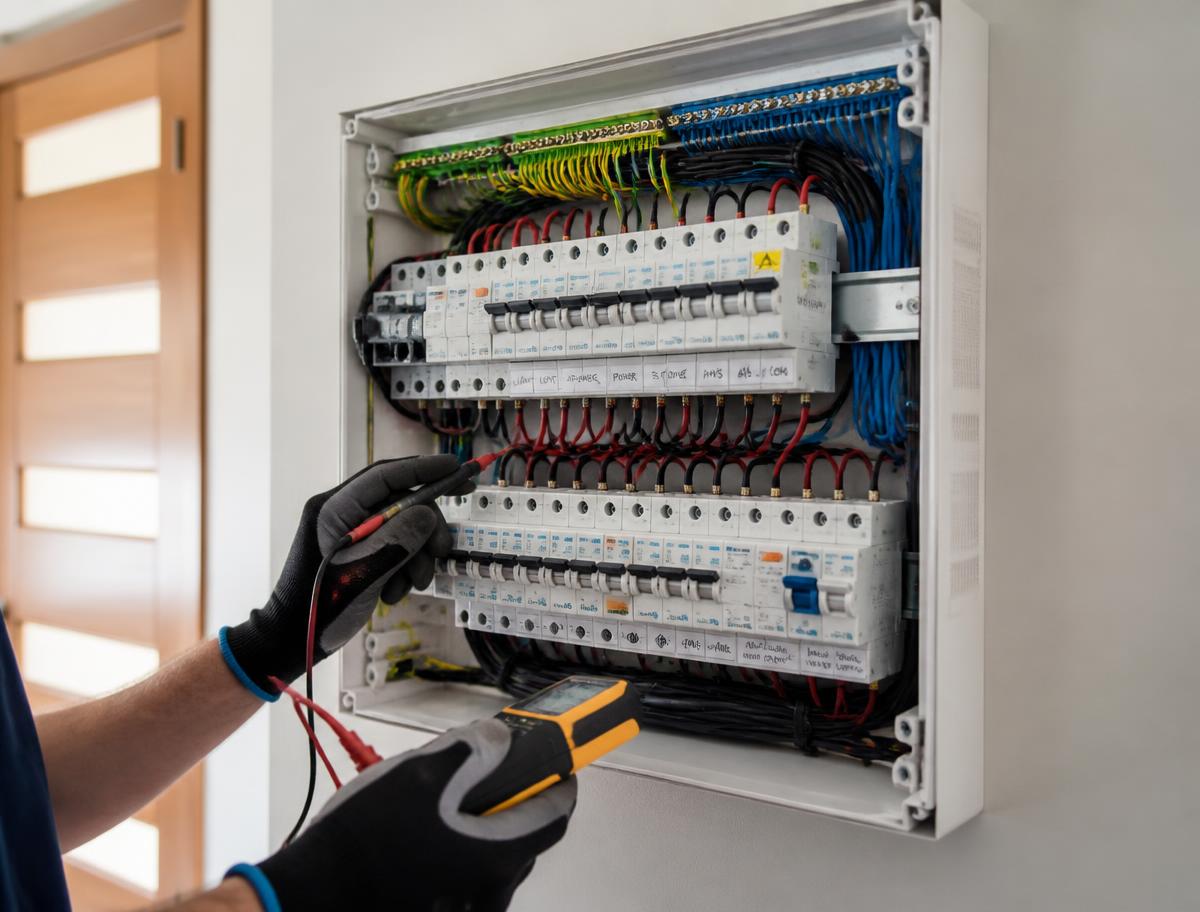
A home charger draws a large, sustained load for hours at a time — very different to a kettle or a heater. That is why it gets a dedicated circuit with its own protective device rather than sharing an existing one.
Adding that circuit requires physical space in the board, adequate supply capacity, and compliant protection. Older boards frequently fail on at least one of those, which is when upgrade work enters the quote.
The good news: a great many Melbourne homes built or rewired in the last two decades need nothing beyond the new circuit itself.
Warning signs
Indicators that work may be required
- Ceramic rewireable fuses instead of circuit breakers
- No safety switches (RCDs) protecting circuits
- A full enclosure with no spare positions for a new breaker
- A timber backing board or visible heat damage
- Frequent nuisance tripping under normal household load
- Previous additions squeezed in without documentation
Only open the hinged switchboard door. Never remove panels or touch wiring — take a photo and let a licensed electrician assess it.
What an upgrade usually involves
- Replacing the enclosure with a larger, compliant board
- Fitting modern circuit breakers and safety switches
- Re-terminating and identifying existing circuits
- Adding the dedicated EV charger circuit and protection
- Testing, labelling and compliance documentation
It is worthwhile work in its own right — it improves safety for the whole house, not just the car.
Common questions
Switchboard FAQ
Do I need a switchboard upgrade to install an EV charger?
Many Melbourne homes do not. An upgrade is typically needed when the board has no spare capacity, still uses ceramic rewireable fuses, lacks safety switches on the relevant circuits, or is in poor physical condition.
How do I know if my switchboard is too old?
Ceramic fuse carriers, a timber backing board, no visible RCDs (safety switches), a crowded enclosure with no free space, or previous ad-hoc additions are all signs that an electrician may recommend work before adding a charger circuit.
Can load management avoid an upgrade?
Sometimes. A load management device can throttle the charger when the rest of the house is drawing heavily, which may allow a charger to be added where capacity is tight. Whether it is suitable is an electrician's judgement.
Is switchboard work included in an EV charger quote?
It should be itemised separately if required. Ask for it to be listed as its own line so you can see what is charger installation and what is board work.
Protection devices and metering vary by charger. The Schneider Electric and Ocular guides explain what each expects at the board, and the EV charger brands hub covers the rest.
We are an information and quote request service — we do not carry out electrical work. All installations are performed by licensed electricians.
Keep reading
More Melbourne EV charging guides
Independent, jargon-free information to help you work out what your home actually needs.
How much does EV charger installation cost?
What actually drives the price of a home EV charger installation in Melbourne, and which parts of the job vary the most.
Read guide7kW vs 11kW vs 22kW
Charging speeds compared in plain language, including why your car's onboard charger often sets the real limit.
Read guideDo I need single or three phase?
How to tell what supply your Melbourne home has, and what changes if you want a higher output charger.
Read guideCan I charge from solar?
Solar diversion, battery integration and what to look for in a charger if you already have panels on the roof.
Read guideWhich EV charger is right for my car?
The main categories of home charger sold in Australia and the features worth comparing before you buy.
Read guidePower your drive
Easy. Local. Trusted.
Charging at home means skipping expensive public fast chargers, waking up to a full battery and knowing the work was completed safely to Australian electrical standards by a licensed electrician.
COMPARE QUOTES & SAVENot sure about your switchboard?
Upload a photo with your enquiry. It gives participating licensed electricians a much clearer picture before they quote.